jan tschichold, 1902–1974
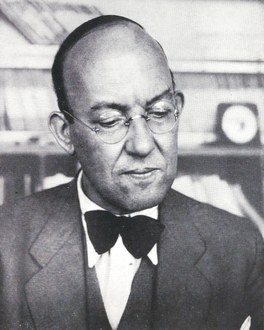
Born in Leipzig, the son of a sign painter, Jan Tschichold trained as a calligrapher before becoming one of the most influential typographers of the twentieth century. His 1925 special issue of Typographische Mitteilungen, elementare typographie, and his 1928 book Die neue Typographie made him the leading voice of typographic modernism. In 1933 the Nazis removed him from his teaching post and arrested him, branding his work “Bolshevist”. He emigrated to Basel that year. There he gradually abandoned the dogmas of the New Typography for a renewed classical approach – a reversal he defended for the rest of his life. From 1947 to 1949 he reformed the design of Penguin Books in England, setting standards that shaped post-war publishing. His typeface Sabon (1967) remains in wide use. He died in Locarno in 1974.
about this archive
The working estate of the typographer Jan Tschichold (1902–1974), digitised by the Deutsches Buch- und Schriftmuseum (German Museum of Books and Writing) of the German National Library, in cooperation with the University of Erfurt and funded by the DFG.
All images are licensed CC BY-SA 4.0, © Lilo Tschichold-Link. Source and metadata: DNBLab. For high-resolution scans, follow the DNB link on each work page. Titles, metadata and dates are shown as catalogued by the DNB. Of the 2,184 works, 148 carry no creation date and appear under n.d., so the timeline shows only the dated works. Where the dataset records only the digitisation date but the DNB catalogue gives the original work’s year, the catalogue year is used and marked on the work page. For a small number of works a year stated in the title (“Skizzenbuch von 1920”) has been adopted instead. These are marked “inferred from title”. The dating of an artist’s working papers is inherently hazy in places. Where several records share a title and year – typically multiple surviving proofs of the same design – they are numbered (1/2, 2/2) and cross-linked. That numbering is ours, for navigation, and not the museum’s. Most records carry the museum’s citation of what they were designed for. The pages that gather the records designed for one book, typeface or letterhead follow that citation, and where the catalogue gives one title and year with slightly different imprints we have treated them as the same work. A citation whose title the museum sets in square brackets describes an object with no title of its own – a letterhead, a publisher’s mark. Those pages show the description without the brackets and say that the museum supplied it. The English renderings shown beneath the German titles are ours too – working translations for navigation and search, not the museum’s. The descriptive notes, subjects, people and material details on work pages come from the full DNB catalogue records and are shown as catalogued, in German, with our English renderings beneath the notes.
The borders on the globe of the life page are those in force on 1 July of the year shown. They come from CShapes 2.0 (Guy Schvitz, Seraina Rüegger, Luc Girardin, Lars-Erik Cederman, Nils Weidmann and Kristian Skrede Gleditsch, “Mapping the International System, 1886–2017: The CShapes 2.0 Dataset”, Journal of Conflict Resolution 66(1), 2022, icr.ethz.ch/data/cshapes), licensed CC BY-NC-SA 4.0. The dataset records the territory of recognised states. It does not show wartime occupation or annexation, so Austria, Poland and Czechoslovakia stay on the map through 1938–45. The names shown for states are ours. Our reduced copy of the data, borders.json, is offered under the same licence.
This archive is an independent project by Stephen Kelman, a graphic designer in the UK. It is not affiliated with the German National Library or the Tschichold estate.